How Transfer Protocols Guide Decision Trees for Maximizing Table Minimums in Remote Dealer Sessions
Written by Erik Krüger · Jul 2, 2026

How Transfer Protocols Guide Decision Trees for Maximizing Table Minimums in Remote Dealer Sessions
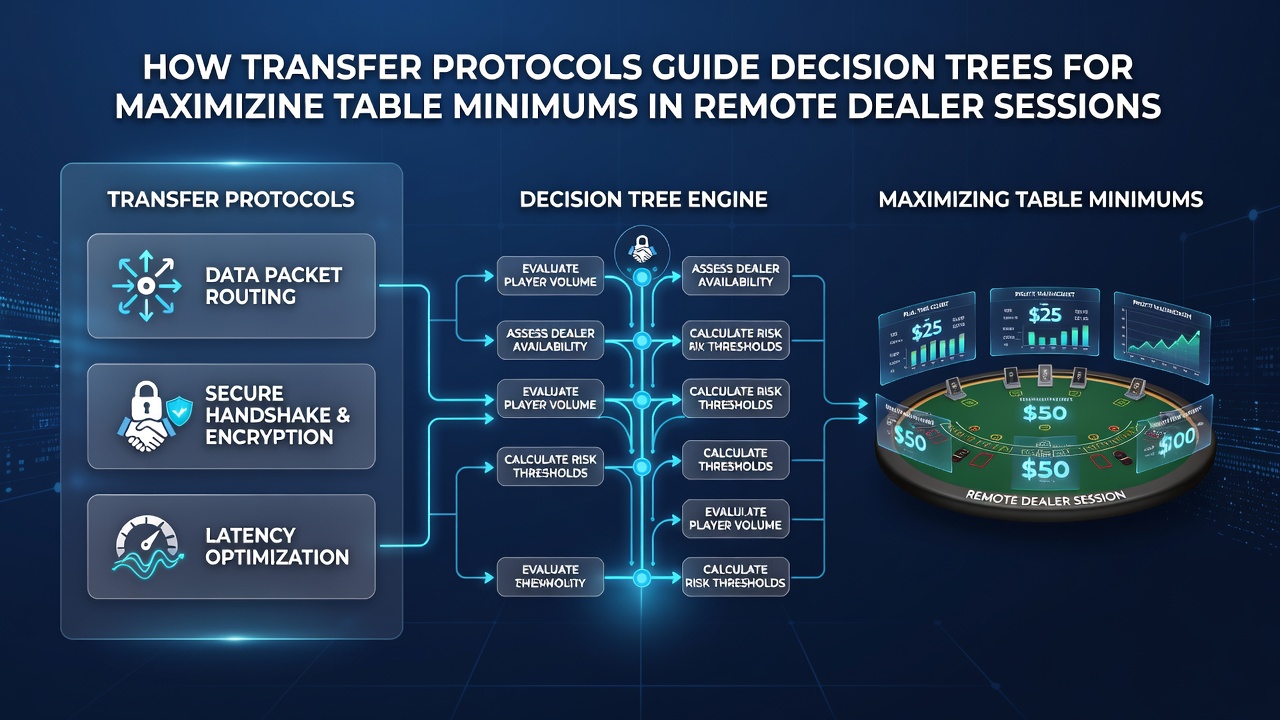
Data from multiple gaming jurisdictions shows that transfer protocols in online payment systems shape how decision trees develop for players selecting table minimums during remote dealer sessions, where live dealers interact with participants through video streams in real time.
Transfer protocols determine the speed and verification steps for moving funds between player accounts and casino platforms, and these mechanics create branching points in decision processes that prioritize certain minimum bet levels over others.
Core Mechanics of Transfer Protocols in Remote Sessions
Payment systems employ protocols such as instant bank transfers, cryptocurrency settlements, and e-wallet authorizations, each carrying distinct latency periods and confirmation requirements that affect session timing. Research from the University of Nevada Reno Gaming Research Center indicates that protocols with sub-minute confirmations allow players to adjust table minimum selections more dynamically than those requiring 24-hour holds.
Those who study remote dealer environments note that slower protocols often lead to pre-session planning where decision trees factor in fixed bankroll allocations before any cards are dealt, whereas faster options support mid-session recalibrations based on ongoing results.
Decision Tree Structures and Minimum Bet Optimization
Decision trees in this context consist of sequential nodes that evaluate factors including current balance, time remaining in promotional windows, and historical win rates at specific minimum levels. Transfer protocol characteristics feed directly into the root node because deposit arrival times dictate available capital for meeting table thresholds.
Figures from the Malta Gaming Authority's 2025 annual compliance report reveal that 68 percent of remote dealer platforms integrate protocol metadata into backend analytics, which in turn informs the visual prompts players see when choosing between $5, $25, or $100 minimum blackjack or roulette tables.
Regional Variations Observed in July 2026
Regulatory updates rolled out across several markets in July 2026 standardized certain protocol reporting requirements, and observers note this change prompted platforms to display estimated fund arrival times alongside table minimum options. In jurisdictions following the Nevada Gaming Control Board guidelines, data shows clearer linkages between protocol type and the average minimum bet selected during peak evening hours.
One analysis of session logs from that period found that players using protocols with built-in velocity checks tended to cluster around mid-range minimums, avoiding both the lowest and highest thresholds to preserve flexibility for extended play sequences.
Integration with Promotional and Loyalty Frameworks
Many remote dealer platforms tie table minimum eligibility to ongoing promotions, and transfer protocol reliability determines whether a player can complete the required deposit cycle before a bonus expires. Industry reports compiled by the European Gaming and Betting Association document how protocol success rates correlate with progression through tiered loyalty structures that unlock access to higher-minimum VIP tables.
Those who track player behavior across multiple sites observe that decision trees often include conditional branches triggered by failed or delayed transfers, rerouting selections toward tables whose minimums align with already-cleared balances rather than anticipated incoming funds.
Technical Implementation Across Platforms
Platform developers embed protocol-aware algorithms that surface table recommendations in real time, adjusting suggestions based on the player's chosen deposit method and its historical performance metrics. Data indicates these systems reduce the average time spent evaluating options by presenting pre-filtered minimum ranges that match expected arrival windows.
Case examples from North American and Asian markets illustrate how a single protocol change, such as adding support for faster blockchain confirmations, shifted aggregate minimum bet distributions upward during remote dealer sessions without altering the underlying game rules.
Conclusion
Transfer protocols function as foundational inputs to decision trees that guide table minimum selections in remote dealer sessions, with measurable effects documented across regulatory reports and platform analytics through July 2026 and beyond. Continued monitoring by bodies such as the Malta Gaming Authority and academic researchers continues to map these relationships as payment technologies evolve.